
A Kodava son of Kodagu · Born 23 July 1955
Cheppudira Arun Machaiah
Sportsman, statesman, sensei. Fifty years of quietly building the place that made him.
Currently Serving
Vice-Chairman, Sports Authority of Karnataka
Sportsman, statesman, sensei. Fifty years of quietly building the place that made him.
Long before the politics, before the bridges and the schools and the long career of public service, there was a young man from the hills who went to Singapore to learn karate. He returned, and in 1977 became India's first National Karate Champion — a fact that gets quietly mentioned only when somebody else brings it up.
Between 1989 and 1993 he fought in the heavyweight category for India across three continents — Indonesia, Japan, Malaysia, China, Mexico, Nepal, Australia. He brought home a bronze from the Asian Championship in Singapore, was named Best Fighter at the Asian Championship in Malaysia, and in 1994 was given the Karnataka Government's Best Sportsperson Award. He is an 8th Dan black belt of the World Karate Federation and a 9th Dan of the Karate India Organisation, and a certified International Referee.
But the part of the story he tells most readily is not any of this. It is the karate training programs — the ones he set up for youngsters across eleven Indian states, the boys and girls in Kodagu who walked into a class one Saturday and walked out, years later, with a national medal of their own.
Champions are made by the masters who refused to keep the form to themselves. — On Sensei Arun

Seven flags, four continents, one quiet man from the hills carrying the national colours.
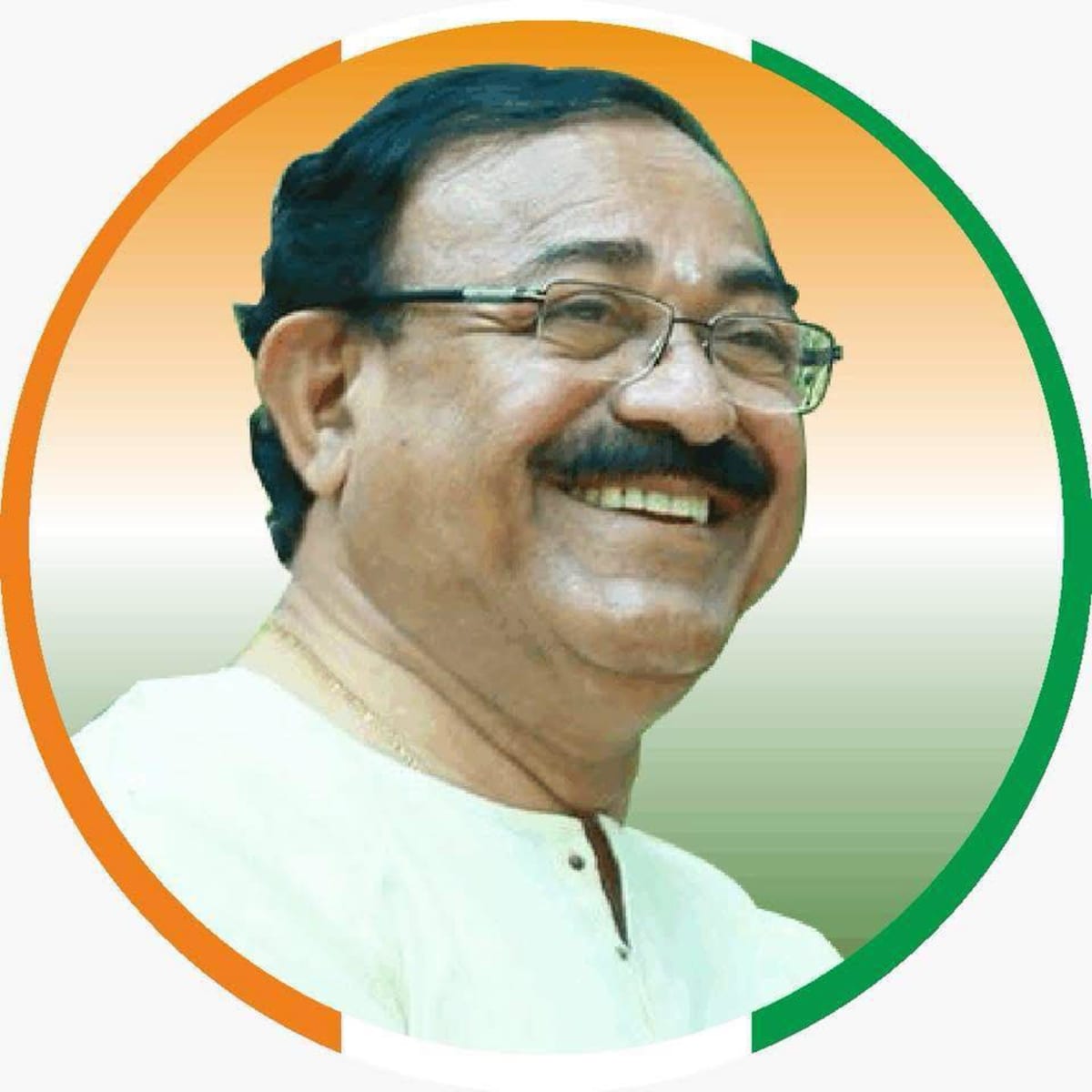 Member of the Legislative Council, 2004
Arun Machaiah joined the Congress in 1979 with a single stated ambition — to improve the quality of life for the people of Kodagu, and through them, of Karnataka. By 1992 he was District Youth Congress President. In 2004 the people elected him, as an Independent, to the Karnataka Legislative Council.
What follows is the kind of list that gets read out at felicitation functions and underestimated in equal measure. Twenty-three bridges. Eight high schools. Five Pre-University Colleges. A judicial court at Ponnampet. The upgrade of the polytechnic at Kushalnagar into an engineering college. A senior-grade college at Virajpet. A fire brigade unit. The first sports hostel in the district run by the Zilla Panchayat — a building that has since sent more than a few children of small farmers to national-level competition.
And then there is the quieter work. More than fifty water supply schemes. Hundreds of open wells dug for drinking water. Check dams and vented dams on the streams. Twenty colonies built from scratch for families who had nowhere to live, with houses and electricity and an anganwadi and a school. Eighteen medical sub-centres. Twenty mini-stadiums for village youth.
He fought, and won, on the Forest Dwellers' and Settlers' Act of 2006 — a bill that benefited more than fifty thousand tribal families across Karnataka, and more than twenty thousand in Kodagu alone. He led the agitation that stopped the Barapole, Abbey and Irpu mini-hydel projects, which would have submerged thousands of hectares of Kodagu under water. He served fifteen years as President of the Coorg Orange Growers' Co-operative Society, reopening a sick industry and putting rural women back to work.
In 2005 UNICEF gave him an award for his work with rural women and children. He doesn't keep it on the wall.
Of all the work he is known for, this is the part that doesn't make the news. For years, Arun Machaiah has run free physical training for young people in Kodagu who wanted a way into the uniformed services — boys from coffee estates and paddy farms, daughters of small planters, kids from the tribal colonies and the towns. Push-ups before sunrise. Long runs through plantation paths. A patient man with a stopwatch, telling them their time was getting better.
Hundreds of them have gone on to serve in the armed forces and paramilitary. Among them, dozens have made it specifically into the Border Security Force — the men and women who guard the Indian frontier from the Rann of Kutch to the snows of Kashmir. They are sons and daughters of Kodagu standing watch on borders most people in Kodagu will never see.
He never asked for anything in return. Not from the kids, not from the families. He just said, come at five, bring water. — A Kodagu parent
He opened the door. They walked through it. That is, in the end, what the work has always been.
At an age when most public men have moved to the verandah and the morning paper, Arun Machaiah is still travelling. In October 2025 he was appointed Vice-Chairman of the Sports Authority of Karnataka, the body chaired by the Chief Minister and responsible for sport across the state. His first public commitment in the new role was, predictably, to get karate formally recognised in Karnataka — a sport in which the state already has Associations in all thirty-one districts and the country's largest population of registered karatekas.
In 2024 he became the first Kannadiga to be appointed Joint Chairman of the Technical Commission of the Karate India Organisation. He has led national contingents to the Commonwealth Karate Championship in Birmingham. He continues to serve as Director of the World Shito-Ryu Karate Federation, a role he has held since 2003.
He still teaches. He still travels for tournaments. He still, on the right kind of evening at home in Mysuru, will sit with a coffee — and the woman who has been beside him through all of it — and answer a question about a bridge sanctioned in 2007 with the same patience he gives to a question about a back-leg roundhouse.
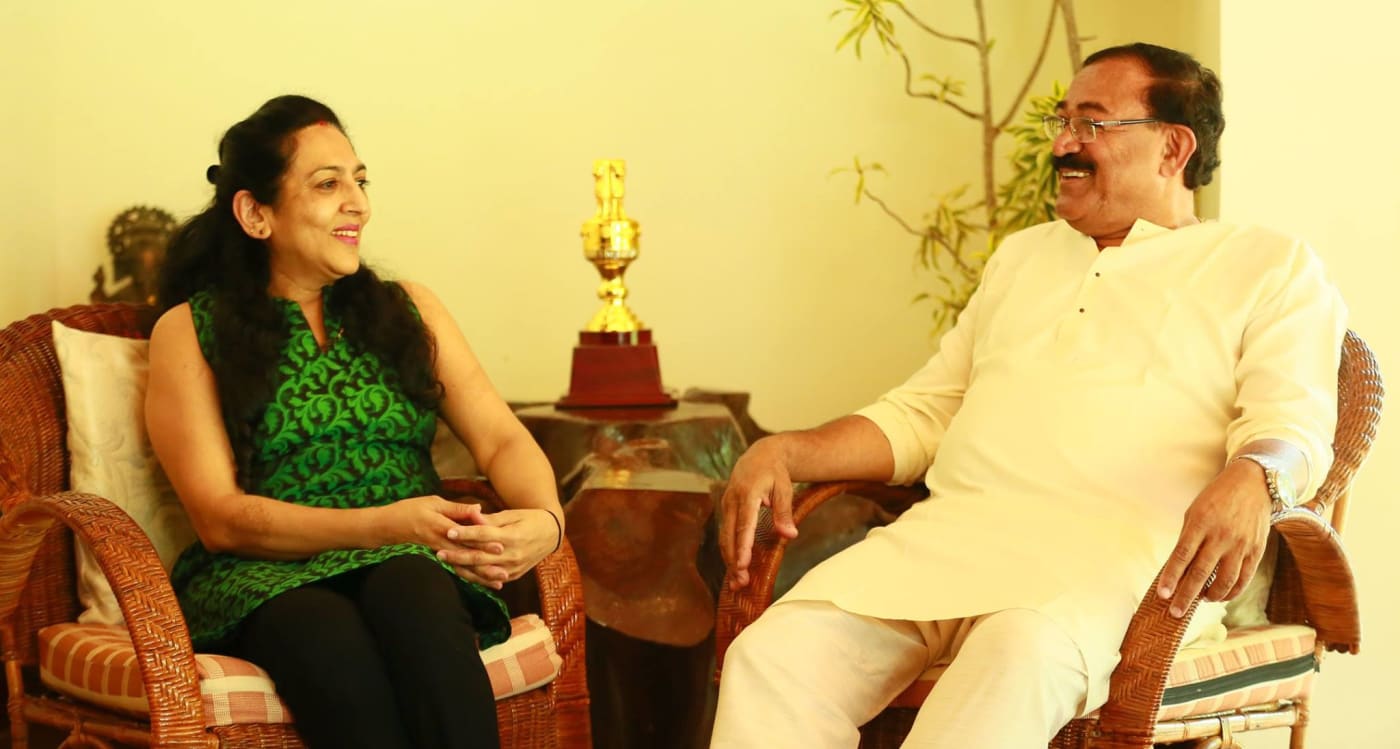 At home in Kodagu
A life arranged the old Kodava way — family, land, service — and lived loudly enough that the quietness underneath is sometimes missed.
Built by family, for family, and for the many people in Kodagu, Karnataka and beyond who have crossed paths with him over the last fifty years — a quiet thank you to a man who has spent his life building the place he came from.